
Wrestling Shoes for High Arches: Support Features to Look For

If your foot leaves a thin, curved print with almost no band connecting heel to forefoot, you have a high arch (pes cavus). On the mat that means two things: your foot is naturally rigid and fast to pivot, but it absorbs less shock and loads pressure onto just two contact zones — the heel and the ball of the foot. Wrestlers with high arches usually don't feel arch pain first; they feel hot spots under the forefoot, lace bite across the instep, and an ankle that wants to roll outward in scrambles. The right shoe fixes all three.
How to check your arch in 30 seconds
Wet the bottom of your foot and step onto a paper bag or dry concrete. A full footprint means flat feet. A print where the middle band is roughly half the width of your forefoot is neutral. If the band is a thin sliver — or missing entirely — you have a high arch. Do it standing with weight on the foot, not sitting; a lot of wrestlers have a normal-looking unloaded arch that only shows its height under load.
1. Midfoot wrap is the single most important feature
A high arch sits above the shoe's footbed, so any dead space under the instep lets the foot slide forward on shots and sideways on pivots. What you want is a shoe with an internal bootie or a wrap-around midfoot band that pulls up into the laces — the ASICS JB Elite IV's internal wrap and the RUDIS Colossus turbine band both do this. They hold the arch from the sides rather than pushing up into it, which is what a cheap molded arch bump gets wrong.
2. Choose a single (unit) sole over an aggressive split sole
Split soles flex right under the arch. If your arch is already high and rigid, that flex groove concentrates bending exactly where you have the least tissue support, and it's a common source of arch cramping late in a match. A single-sole shoe such as the Nike Freek or ASICS Aggressor spreads the load along the whole foot. If you want a split sole for speed, pick one with a firm shank — the Nike Inflict 3 is split but stiff through the midfoot, which is why it works for high-arched wrestlers when a soft split sole doesn't.
3. Look for cushioning under the heel and forefoot, not under the arch
Because a high arch never touches the ground, arch padding does nothing for you. Your pressure lives at the two ends of the foot. A shoe with a slightly thicker heel pad and a full-contact forefoot rubber — the Adidas Combat Speed 5 and Nike Hypersweep are good examples — reduces the hot spots and stone-bruise feeling on a hard mat over a concrete floor.
4. Ankle support: high arches roll outward
High-arched feet tend to supinate — the ankle rolls to the outside edge. That's the injury pattern to plan for. A high-top upper with a strap (Adidas Combat Speed, Nike Inflict 3) keeps the joint stacked over the foot when you land off a sprawl. If you've already rolled an ankle once, treat a strapped high-top as non-negotiable rather than a preference.
5. Fix lace bite with skip lacing
The most common complaint from high-arched wrestlers is a burning line across the top of the foot. That's lace pressure on a raised instep. Skip the eyelet pair that sits directly over the peak of your arch — lace through, jump one row, then resume. You keep heel lockdown and lose the pressure point. Flat laces spread load better than round ones, and a lace garage keeps the ends tucked so you don't lose tension mid-match.
6. Sizing: go by width and volume, not just length
A high arch takes up vertical volume, so a shoe that measures the right length can still feel tight over the top. Don't size up in length to fix that — a longer shoe just adds heel slip. Instead choose a higher-volume model with a roomier toe box and a more forgiving instep: the Adidas Combat Speed 4, ASICS Aggressor Classic, and RUDIS Colossus Inferno all run higher-volume than a JB Elite. Try shoes in the evening when your feet are at their largest.
Do you need an insole or orthotic?
Most wrestlers don't. Wrestling shoes are built with a thin, flat footbed on purpose — it keeps you low and close to the mat, and stuffing in a thick supportive insole raises your foot in the shoe and reintroduces heel slip. If a podiatrist has prescribed an orthotic for you, buy a half-size up in a high-volume model and remove the stock liner first. If you're just chasing comfort, a thin low-profile insole is the most you should add.
Warm-up and recovery that actually helps
Rigid high arches respond well to soft-tissue work. Roll a lacrosse ball or frozen water bottle under each foot for 60 seconds before practice, then do 20 slow calf raises — tight calves pull the arch higher and worsen forefoot pressure. After a hard session, loosen the laces immediately and let the foot spread out. Cramping in the arch during a match is almost always a calf and hydration problem, not a shoe problem.
Quick picks by need
Best overall support for high arches: ASICS JB Elite IV — internal midfoot wrap with a firm platform. Best ankle lockdown: Adidas Combat Speed 5. Best high-volume fit if the instep feels tight: ASICS Aggressor Classic or RUDIS Colossus Inferno. Best single sole for shock spreading: Nike Freek. Best budget option: Nike Takedown 4 with skip lacing.
Shoes featured in this post
- ASICS JB Elite IV — Red— Internal midfoot wrap, best all-round high-arch support
- Adidas Combat Speed 5 — Grey/Gold— Strapped high-top, controls outward ankle roll
- ASICS Aggressor Classic — White— Higher-volume fit for a tall instep
- Nike Inflict 3 — Black/Gold— Split sole with a stiff shank plus ankle strap
- RUDIS Colossus Inferno— Widest, roomiest upper in the lineup
- Nike Freek — White/Gold— True single sole that spreads load evenly
- Nike Takedown 4 — Total Orange— Budget pick — pair it with skip lacing
Frequently asked questions
What wrestling shoes are best for high arches?
Look for a firm midfoot wrap and a strapped high-top rather than arch padding. The ASICS JB Elite IV has an internal wrap that holds a high arch from the sides, and the Adidas Combat Speed 5 adds strap-locked ankle support for wrestlers who supinate.
Should I use a split sole or single sole if I have high arches?
A single sole is usually better. Split soles flex directly under the arch, which is where high-arched feet have the least support and often cramp. If you want a split sole, choose one with a stiff shank like the Nike Inflict 3.
How do I stop lace bite on the top of my foot?
Skip the eyelet pair sitting over the peak of your arch — lace through, jump one row, then continue. Use flat laces instead of round ones to spread pressure, and tuck the ends in a lace garage so tension holds through the match.
Do I need insoles or orthotics in wrestling shoes?
Most wrestlers don't. Thick insoles raise the foot inside the shoe and cause heel slip, and wrestling shoes are intentionally flat to keep you low. If you have a prescribed orthotic, buy a half-size up in a high-volume model and remove the stock liner first.
Do high arches need a wider wrestling shoe?
Not necessarily wider — higher volume. A high arch takes up vertical space, so a roomier instep matters more than extra width. The ASICS Aggressor Classic and RUDIS Colossus Inferno both run higher-volume than a JB Elite.
Why do my arches cramp during matches?
Usually tight calves, dehydration, or a shoe that flexes right under the arch — not the arch itself. Roll the foot before practice, do slow calf raises, and switch to a single-sole or stiff-shank shoe if cramping keeps recurring.
Related models
Hand-picked wrestling shoes that match this guide — tap any model for sizing, specs and photos. See customer reviews →
Ready to gear up?
Browse the latest drops or message us directly for sizing help.
Keep reading
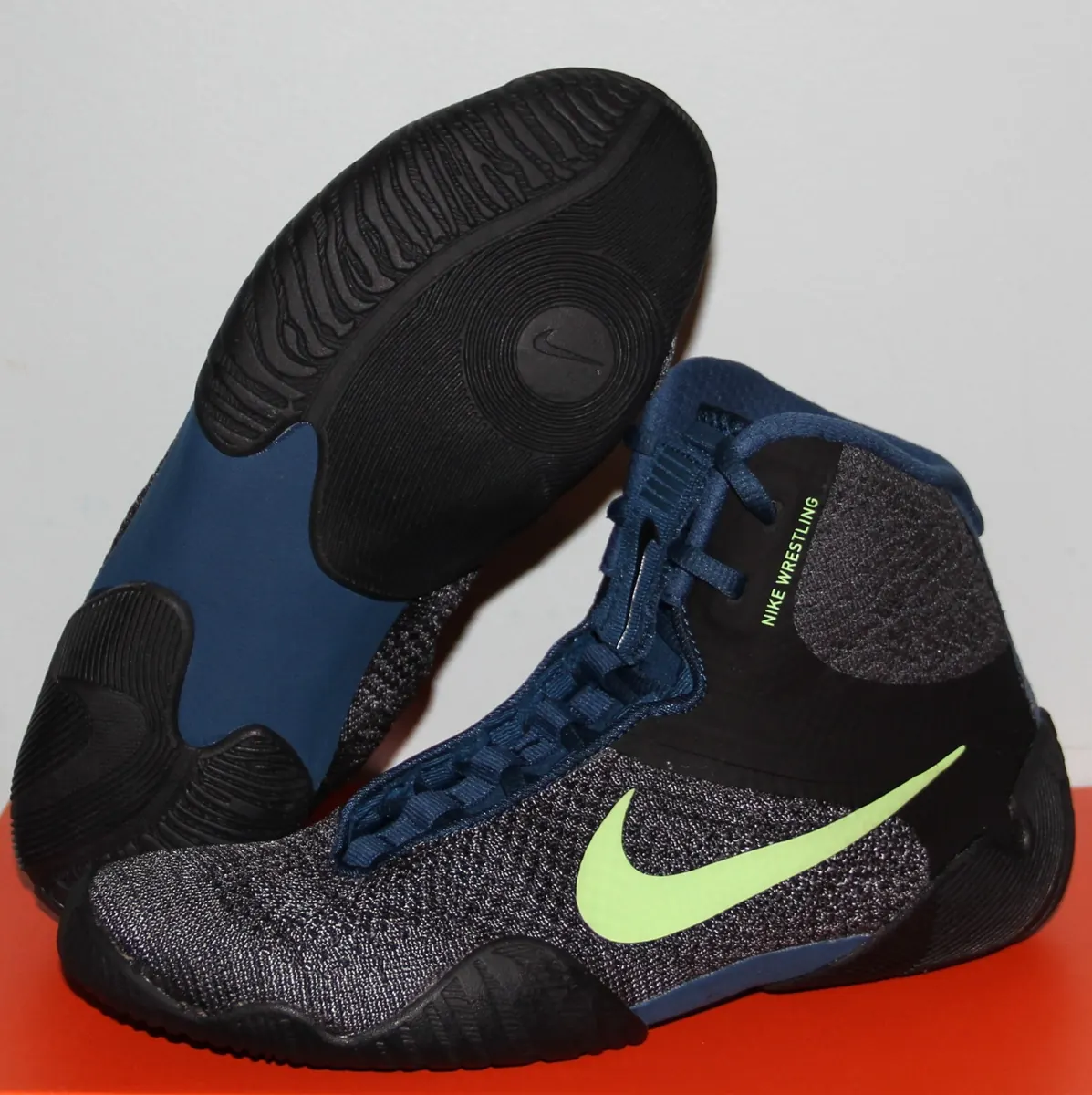
Nike Tawa Wrestling Shoes: Navy/Volt, Fit and Buying Guide
A closer look at our Nike Tawa Navy/Volt listing, Nike's published construction details and the fit questions to ask before buying.
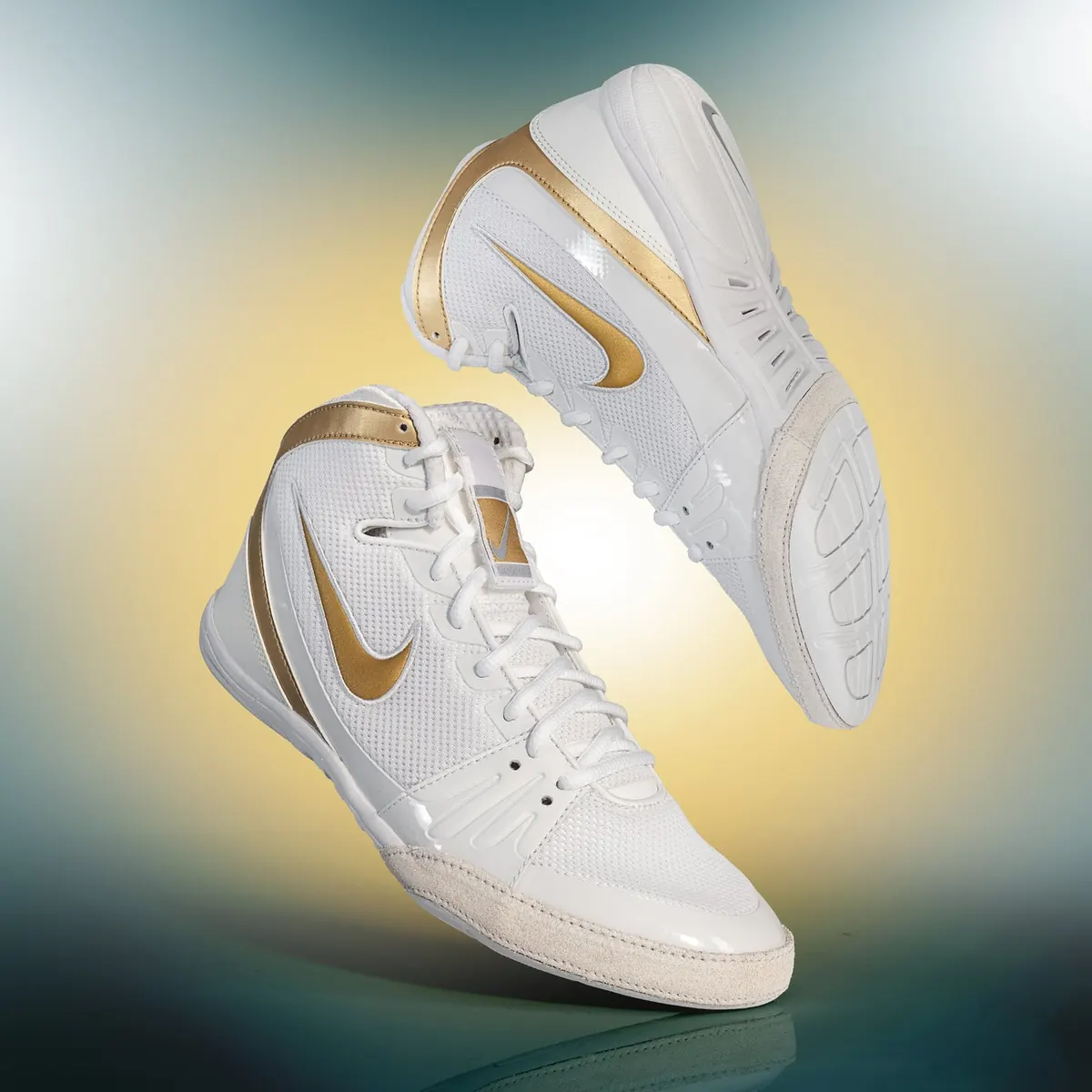
Nike Freek Wrestling Shoes: White/Gold and What to Check
Buying Nike Freek shoes? Compare the actual White/Gold listing and check the edition, size label and order details before payment.