
How Long Do Wrestling Shoes Last? When to Replace Them

Most wrestlers replace shoes far too late. A pair that still looks fine can be months past its grip life, and grip is the entire point. Here's how long a pair actually lasts and the checks that tell you when to buy again.
The realistic lifespan
One full season of daily practice — roughly 400 to 500 mat hours — is what a mid-tier wrestling shoe is built for. Competition-only pairs used two or three weekends a month can go two or three seasons. Youth wrestlers usually outgrow shoes before they wear them out.
Sign 1: the gum sole is polished
Run a thumb across the outsole under the ball of the foot. New rubber grabs your skin; dead rubber feels slick and shiny. Once that patch is polished, you'll slip on shots long before the shoe looks worn out.
Sign 2: the upper has stretched
If you have to lace tighter every week to get the same lockdown, the upper mesh has given out. Once you're cranking laces hard enough to feel lace bite, the shoe is no longer holding your foot — it's being strangled into place.
Sign 3: the sole is separating
Check the seam where the outsole meets the upper at the toe. Any gap catches on the mat and will tear wider mid-match. Small separations can be glued with a shoe-specific urethane adhesive once; a second lift means replace.
Sign 4: heel slip that lacing can't fix
A packed-out heel counter lets your foot lift on every stance change. Try a heel-lock lacing pattern first — if it still slips, the internal counter is broken down.
Sign 5: pain that follows the shoe
New arch or forefoot pain that shows up in your wrestling shoes and disappears in everything else is a shoe problem, not a training problem.
Make a pair last longer
Never wear them off the mat, loosen and remove them by hand rather than stepping on the heel, air-dry them out of the bag after every practice, and rotate two pairs if you're in the room six days a week. Two rotated pairs outlast three worn consecutively.
Shoes featured in this post
- Adidas Tech Fall 2.0K— Most durable daily trainer
- Nike Tawa — Navy/Volt— Built for room mileage
- ASICS Matflex 7 — Grey/Black— Cheap second rotation pair
- ASICS JB Elite IV — Red— Keep as competition-only
Frequently asked questions
How often should you replace wrestling shoes?
Once per competitive season for daily practice shoes, or roughly every 400–500 mat hours. Competition-only pairs can last two to three seasons because they see a fraction of the mileage.
How do I know if my wrestling shoes are worn out?
Check five things: a shiny, slick outsole under the ball of the foot, an upper that needs ever-tighter lacing, any sole separation at the toe, heel slip that heel-lock lacing can't fix, and new foot pain that only appears in those shoes.
Can you repair wrestling shoes?
Small sole separations can be re-glued once with a urethane shoe adhesive, and blown eyelets can be re-stitched. Worn-out grip cannot be repaired — once the gum rubber is polished, the shoe is done.
Should I have two pairs of wrestling shoes?
If you train five or more days a week, yes. Rotate a durable trainer for the room and keep a lighter competition pair fresh for tournaments. Two rotated pairs outlast three worn back to back because the uppers get time to dry and rebound.
Do wrestling shoes stretch over time?
Yes. Mesh and synthetic uppers relax roughly a quarter to a half size within the first few weeks, which is why a new pair should feel snug but never painful out of the box.
Related models
Hand-picked wrestling shoes that match this guide — tap any model for sizing, specs and photos. See customer reviews →
Ready to gear up?
Browse the latest drops or message us directly for sizing help.
Keep reading
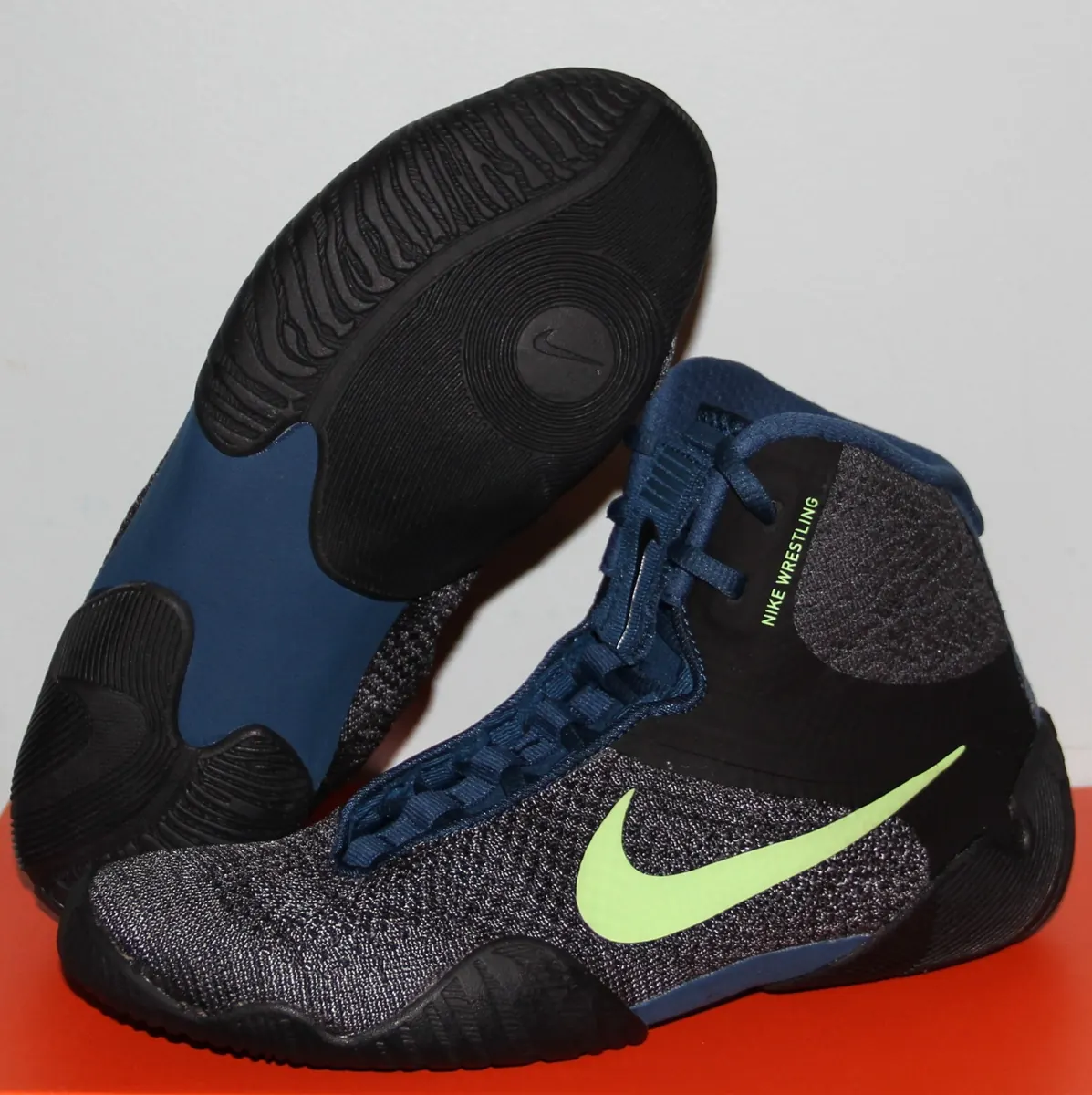
Nike Tawa Wrestling Shoes: Navy/Volt, Fit and Buying Guide
A closer look at our Nike Tawa Navy/Volt listing, Nike's published construction details and the fit questions to ask before buying.
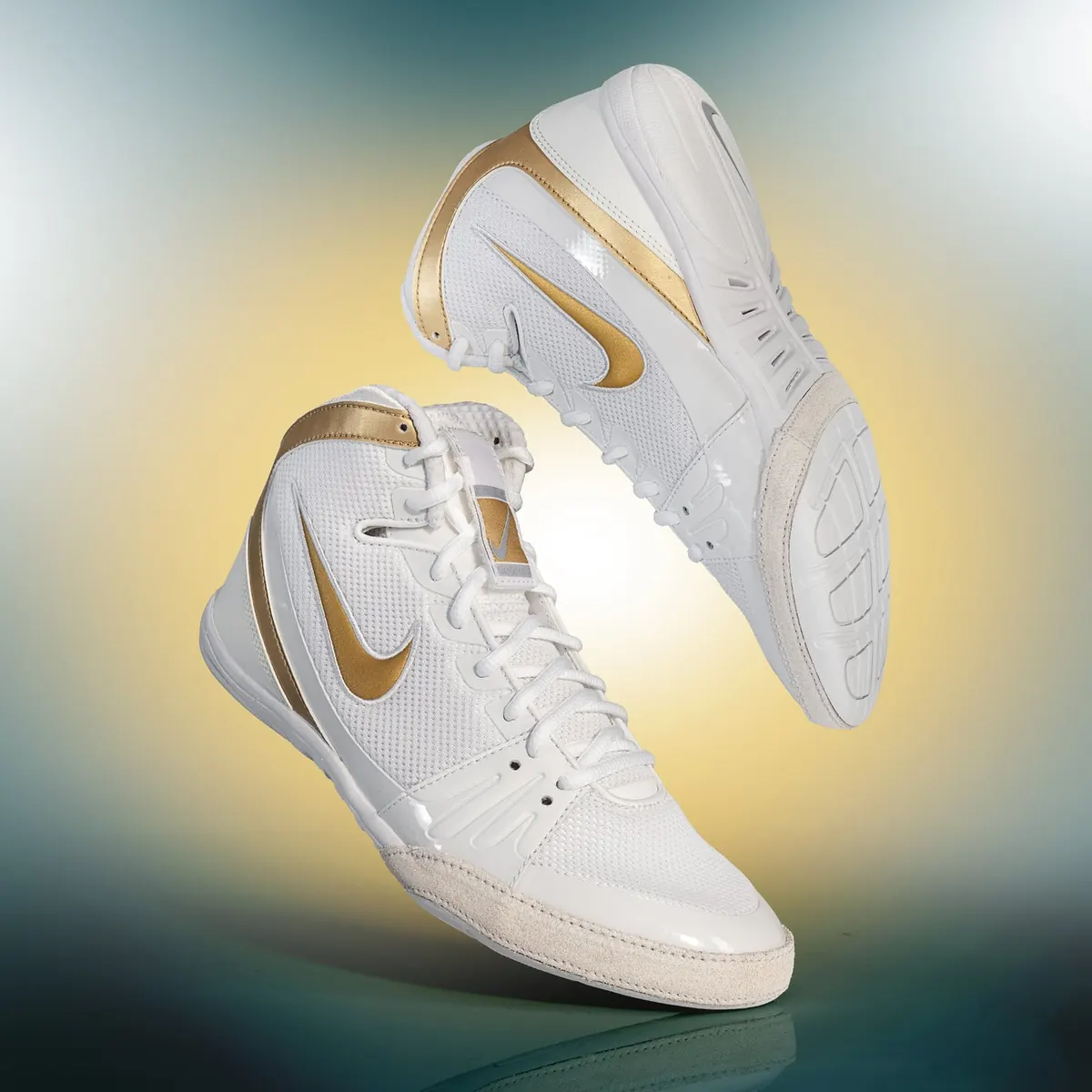
Nike Freek Wrestling Shoes: White/Gold and What to Check
Buying Nike Freek shoes? Compare the actual White/Gold listing and check the edition, size label and order details before payment.